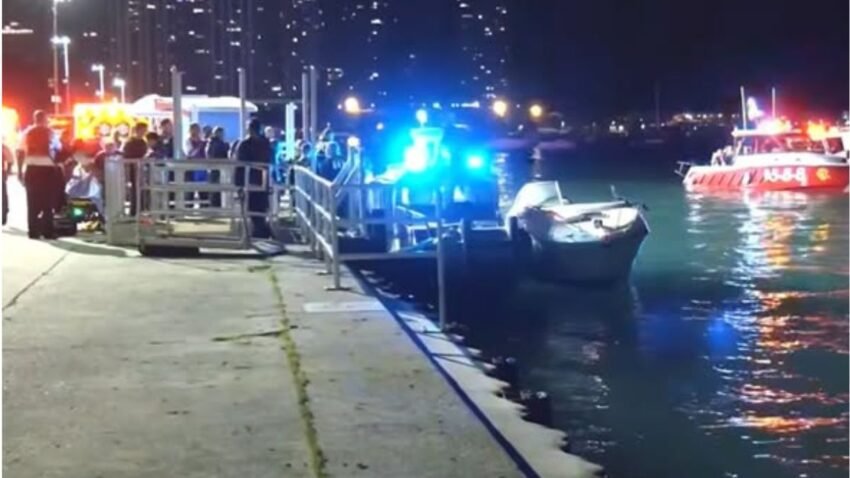
Two Lake Michigan boat accidents in Chicago left one dead and several injured, highlighting safety risks, overcrowding, and urgent calls for stricter boating rules and awareness.
Lake Michigan has long been a centerpiece of Chicago’s identity, offering recreation, commerce, and scenic beauty. Yet in the summer of 2026, the lake became the site of two tragic boating accidents that underscored the dangers of recreational navigation and the importance of safety measures.
The first incident occurred on June 26 near Monroe Harbor, when two vessels collided late at night, resulting in one fatality and multiple serious injuries.
The second took place on August 3 near Kenwood, when a boat sank close to shore, sending seven passengers into the water. Together, these accidents highlight recurring risks on Lake Michigan and raise pressing questions about boating safety, enforcement, and community awareness.
The Monroe Harbor Collision
On June 26, 2026, at approximately 11:45 p.m., two recreational boats collided about 1.5 miles offshore near Monroe Harbor.
One vessel, a 38‑foot boat carrying nine passengers, was overtaken by a 42‑foot boat with five passengers aboard. The collision was violent, leaving one woman, Johanna H. Gregory, 26, of Chicago’s West Loop, dead at the scene.
Four others were rushed to hospitals in serious to grave condition.
The Chicago Fire Department responded within seven minutes, deploying rescue boats and medical teams. The Coast Guard assisted in towing the damaged vessels back to shore.
Nine passengers refused medical treatment, but the incident left a lasting impression on the city. Authorities later emphasized that the collision was preventable, citing the need for vigilance, proper lookout, and adherence to navigation rules.
The tragedy was compounded by the timing. Late‑night boating reduces visibility and increases the risk of misjudging distances or speeds.
Investigators noted that overtaking maneuvers must be executed with extreme caution, especially in crowded waters near Chicago’s harbors.
The Kenwood Boat Sinking
Just weeks later, on August 3, 2026, another boating emergency unfolded near the 4700 block of DuSable Lake Shore Drive in Kenwood. Around 7 p.m., a vessel carrying seven passengers began sinking approximately 20 yards offshore.
The Chicago Fire Department’s scuba team responded swiftly, pulling all passengers from the water.
Three individuals were hospitalized in good condition, while four refused medical treatment. Unlike the Monroe Harbor collision, this incident did not result in fatalities, but it highlighted another dimension of boating risk vessel integrity and overcrowding.
The proximity to shore may have prevented greater tragedy, but the sinking raised questions about maintenance, capacity limits, and preparedness.
Authorities stressed that even near land, boats can sink rapidly, leaving passengers vulnerable if they are not wearing life jackets or if rescue teams are delayed.
Community Impact
Chicago residents were shaken by the back‑to‑back accidents. Monroe Harbor, a popular destination for recreational boaters, became a symbol of tragedy, while the Kenwood sinking reminded locals that accidents can occur even close to shore.
Community leaders and safety advocates called for increased awareness campaigns, stricter enforcement of boating regulations, and expanded safety training.
The Coast Guard issued reminders about navigation rules, life jacket use, and the dangers of operating under the influence.
Policy and Enforcement
The accidents reignited debate over boating regulations in Chicago. Some officials argued for stricter enforcement of capacity limits and nighttime navigation rules.
Others emphasized education, suggesting that mandatory safety courses could reduce risks.
The Coast Guard and Chicago Fire Department highlighted their rapid response times but acknowledged that prevention is the ultimate goal.
Enforcement alone cannot eliminate accidents; boaters must take responsibility for their own safety and that of their passengers.
This comparison illustrates the different risks posed by boating: collisions due to navigation errors and mechanical failures leading to sinking. Both demand vigilance and preparedness.
The summer of 2026 will be remembered in Chicago for the tragedies on Lake Michigan.
The Monroe Harbor collision claimed a young woman’s life and left several others gravely injured, while the Kenwood sinking sent seven passengers into the water, three of whom required hospitalization.
Together, these incidents underscore the importance of boating safety, from wearing life jackets to respecting navigation rules and ensuring vessel integrity.
For Chicago, the accidents serve as a call to action. Authorities, community leaders, and boaters must work together to prevent future tragedies.
Education, enforcement, and personal responsibility are all essential. Lake Michigan offers beauty and recreation, but it also demands respect. The lessons of 2026 must not be forgotten, lest history repeat itself on the waters of Chicago.